Millwall vs West Ham: The Rivalry & Matchday Guide
The Dockers derby is one of English football's most storied rivalries, and after more than a decade apart, it's back. Here's the history, what both grounds are really like, and how to see it live.

Football Finder Team
· 8 min read

Millwall vs West Ham: The Rivalry Explained, and How to See It Live
Some derbies are about who finishes higher in the table. This one isn't. Millwall vs West Ham, the "Dockers derby", is rooted in more than a century of London history, and it's one of the most intense fixtures in the English game. The two clubs haven't met in a league match since the 2011-12 season, so an entire generation has grown up on the stories without ever seeing it live.
That changes now. With West Ham relegated to the Championship for 2026-27, the derby is back on the calendar for the first time in over a decade, home and away, The Den in South Bermondsey and the London Stadium in Stratford. If you're planning to travel for one of these games, here's the real context: where the rivalry comes from, what both grounds are actually like on matchday, and how to get in.
For the wider range of grounds and fixtures around the capital, see our guide to watching football in London.
Where does the Millwall vs West Ham rivalry come from?
The short version: it didn't start on a football pitch, and it's older than either club's current ground.
Both clubs grew out of riverside workforces in the late 1800s. Millwall began in 1885 as Millwall Rovers, formed by workers at J.T. Morton's canning and preserve factory on the Isle of Dogs. West Ham traces back to Thames Ironworks FC, founded in 1895 by shipbuilders in the Royal Docks, before becoming West Ham United in 1900. Two working-class communities, on opposite sides of the Thames, with a river and a lot of local pride between them.
Where the popular history gets shakier is the "why." The story usually told is that the bitterness was sealed during dock strikes, when one workforce broke the other's picket line. It's a great story - and it's the reason the "Dockers derby" name stuck - but historians tend to treat the strike-breaking origin as folklore more than documented fact. What's not in doubt is that the animosity is real, it's old, and it runs deeper than football. That's the key thing to understand before you go: this is a clash of identity and local history, not just 90 minutes.
How accurate is the 'Green Street Hooligans' movie?
For a lot of fans outside the UK, the 2005 film Green Street Hooligans is where this rivalry first appeared on the radar - all organised firms and pre-arranged battles in the streets. It put the fixture on the global map, but it's worth being clear about what's real and what's Hollywood.
The widespread, choreographed violence the film depicts isn't the modern matchday. Hooliganism was a genuinely serious part of this rivalry's past, especially through the 1970s and 80s, and there have been ugly flashpoints since. But today's games sit inside large, well-drilled police operations built specifically to keep things calm. You are not walking into the film.
What the movie gets right is the feeling. The hostility between the hardcore of the two fanbases is real, and it's rooted in that century of history. The film took that kernel of truth and amplified it for the screen. Treat it as drama, not a documentary - and definitely not a warning.
What's the matchday atmosphere actually like at The Den?
Here's where a lot of write-ups get it wrong. For the vast majority of Millwall's home games, The Den is one of the best old-school atmospheres in London - and a brilliant ground for a neutral to tick off. It's compact, just over 20,000, and the noise is close to the pitch and pretty much constant. The famous "No one likes us, we don't care" identity reads as pride and defiance far more than menace. Go to a regular league game and what you'll find is a proper, traditional English football crowd: loud, characterful, and perfectly welcoming if you're there for the football. Have a look at our pubs and food nearby to plan around it.
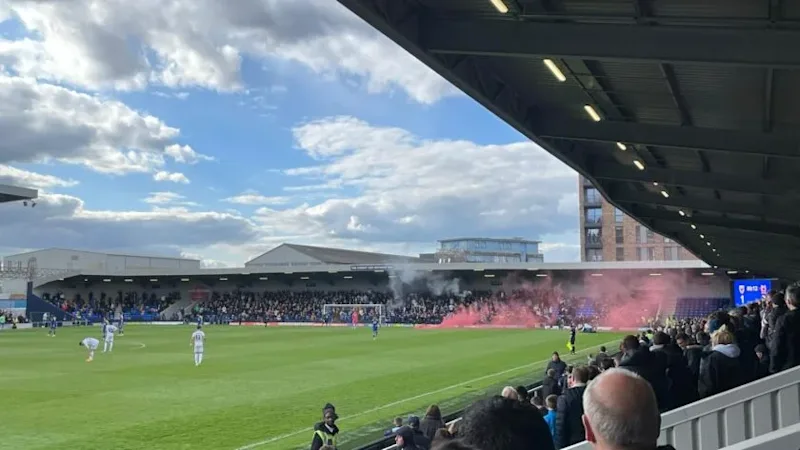
But the derby is a different animal. For this specific fixture, the intensity will be on another level - louder, edgier, and charged with everything that's been building since 2012. That's part of what makes it worth seeing. Just go in understanding that derby day is not a normal day at The Den, and plan accordingly.
What's it like when West Ham host at the London Stadium?
This has a completely different character, because the ground does. West Ham moved to the London Stadium in Stratford in 2016, and it's the opposite of The Den: a big, modern, roughly 62,500-capacity arena built for the 2012 Olympics. There's an athletics track between the stands and the pitch, which fans and critics alike say takes the edge off the atmosphere on quieter days - the crowd simply sits further from the action than at a traditional ground.
But a derby fills it and transforms it. Put 60,000-plus in for a fixture like this and the openness stops mattering; it becomes a wall of noise. Practically, the bigger stadium also makes this leg far easier to get into than the Millwall home game - more on that below. It's in Stratford, superbly connected by transport and surrounded by the Olympic Park, so it's a more open, easier matchday than the trip to The Den. You can see West Ham's fixtures and ticket info here.
Should a neutral or tourist go to Millwall vs West Ham?
Yes - and don't let the reputation scare you off. This is a fantastic fixture to experience, and going as a neutral is completely doable with a bit of common sense. The trick is simple: blend in with the home crowd.
Buy a ticket in a home section, and ideally aim for a calmer part of the ground - a family or general seating area rather than the singing end where the noise (and the edge) is concentrated. Don't wear the away team's colours, and skip a random club shirt from home too; neutral clothing is your friend. Go along with the home crowd - there's nothing wrong with clapping a home goal - and just don't make yourself the story. Do that and you'll have a brilliant, authentic day watching one of English football's most characterful rivalries.
For transport, timing and the journey back after full time, plan your football matchday before arriving.
How do I get tickets for Millwall vs West Ham?
This is where the two legs really differ, so plan for each separately.
The Millwall home game at The Den is the hard one. It's a small ground - just over 20,000 - and a derby this big will be in huge demand, so expect tickets to prioritise members and season-ticket holders and to move quickly, with little or nothing on general sale. If you want this leg, get on the club's membership and ticketing info as early as you can.
The West Ham home game at the London Stadium is far more attainable. With around 62,500 seats there's simply more supply, and general-sale availability is much more likely even for a fixture like this. Either way, check both clubs' official channels first, then compare what's on the trusted resale market via TicketCompare for Millwall and West Ham. One firm rule for both legs: don't buy from touts outside the ground - fakes and turnstile refusals are common.
How do you get to The Den and the London Stadium?
The Den is in South Bermondsey, south-east London - South Bermondsey station is closest, with Surrey Quays on the Overground also walkable. Expect a visible police presence on derby day and follow the signed routes. The London Stadium is in Stratford, east London, a short walk through the Olympic Park from Stratford station, one of the best-connected hubs in the city. For everything else on in town that weekend, see all football matches in London.
Why does the 2026-27 season matter so much?
It's hard to overstate the wait. The last league meeting was the 2011-12 season - in football terms, an age. A whole generation of supporters has grown up hearing about this derby without seeing it. The 2026-27 Championship season ends that, with both legs back on the fixture list for the first time in over a decade. After years of pent-up anticipation, these won't feel like ordinary league games to either set of fans - and that's exactly why they're worth travelling for.
Putting it in perspective
We've seen plenty of London derbies. This one stands apart, because it's built on more than bragging rights - it's about identity and a century of local history. The reputation is real, but so is the fact that thousands attend these games without any trouble. Go in prepared, behave like a guest in the home end, and you'll witness one of the last genuinely raw, old-fashioned experiences in English football.
FAQ
Is it safe for a tourist to attend a Millwall vs West Ham match?
Yes. It's an intense fixture, but thousands attend without trouble. Buy a seat in a home section - ideally a calmer family area rather than the singing end - wear neutral clothing, don't wear away colours, and go along with the home crowd. Behave like a guest and you'll be fine.
Can I buy tickets for Millwall vs West Ham on matchday?
It depends which leg. At The Den (just over 20,000) it's very hard - the game prioritises members and usually sells out, so plan well ahead. At West Ham's London Stadium (around 62,500) there's far more availability and general sale is more likely. For both, avoid touts; use official channels or a trusted resale aggregator.
What's the real story behind the Millwall and West Ham rivalry?
It's the "Dockers derby," rooted in rival riverside workforces in the late 1800s - Millwall from an Isle of Dogs canning factory, West Ham from the Thames Ironworks shipbuilders. The popular dock-strike origin is more folklore than proven fact, but the bitterness is genuinely over a century old.
What's the atmosphere like at The Den?
For most home games it's one of London's best old-school atmospheres - compact, loud, and welcoming to neutrals who are there for the football. For a West Ham derby specifically, expect it to be far more intense.
What should I wear to the match as a neutral fan?
Neutral clothing. No away colours, and skip your own club's shirt from home too. The goal is to blend in with the home crowd.
How accurate is the movie 'Green Street Hooligans'?
The mass, organised violence is a Hollywood exaggeration of a heavily policed modern reality. But the deep hostility it portrays between the two fanbases is real and rooted in over a century of history.